The Logic of the Machine: Fundamentals of Programming
Demystify the language of computers and learn how foundational code shapes our modern digital reality, from basic algorithms to complex data structures.
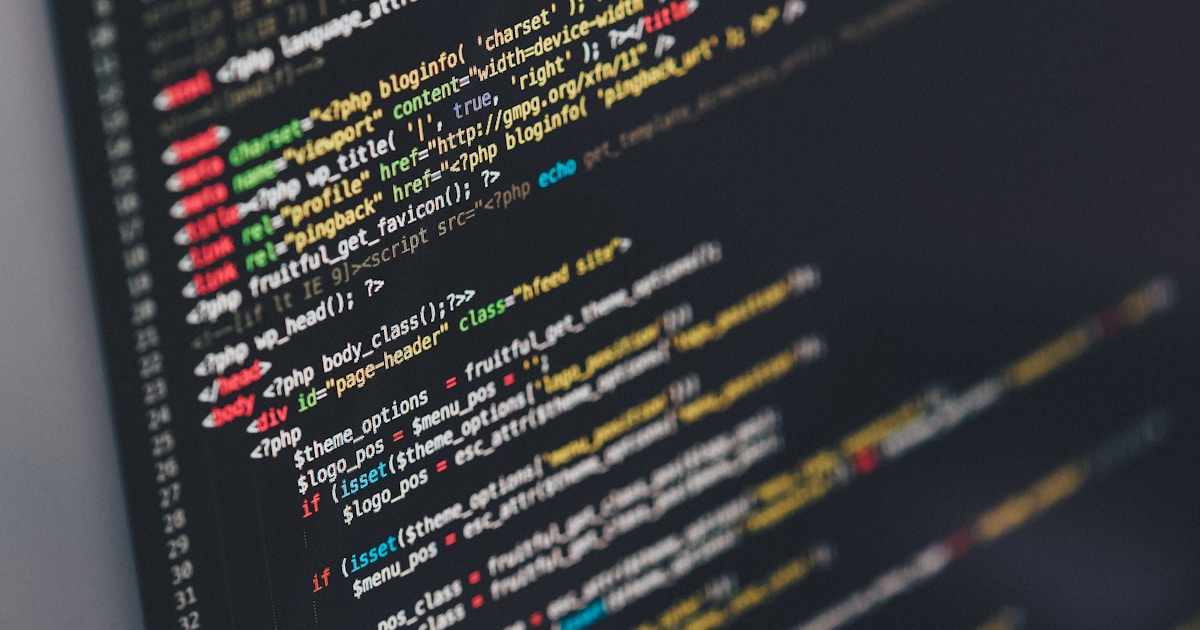
Every app on your phone, every website you visit, every recommendation algorithm that serves your next video — all of it begins with the same thing: a human writing instructions that a machine can understand. Programming is the art of translating human intent into computational logic, and it is the most transformative skill of the 21st century.
"Everybody should learn to program a computer, because it teaches you how to think." — Steve Jobs
What Is Programming, Really?
At its most fundamental level, programming is the process of creating a set of instructions — called code — that tells a computer what to do. These instructions must be precise, unambiguous, and sequential. Computers are extraordinarily fast but fundamentally literal; they do exactly what you tell them, nothing more and nothing less.
The earliest "programs" were physical: punched cards fed into mechanical looms in the 1800s. Ada Lovelace, working alongside Charles Babbage on his Analytical Engine, is widely credited as the first computer programmer. She recognized that machines could manipulate not just numbers, but any symbols according to rules — a conceptual leap that took a century to fully appreciate.
Programming Languages
Just as humans communicate in English, Spanish, or Mandarin, programmers communicate with computers through programming languages. Each language has its own syntax (grammar rules) and is designed for different use cases:
- Python — Known for its readability and simplicity, it's the go-to language for beginners, data science, and AI development.
- JavaScript — The language of the web. Every interactive website you've ever used runs JavaScript in your browser.
- Java — A workhorse of enterprise software and Android app development, prized for its "write once, run anywhere" philosophy.
- C / C++ — Low-level languages that offer maximum performance. Operating systems, game engines, and embedded systems are built in C/C++.
Core Concepts Every Programmer Learns
Variables and Data Types
A variable is a named container that stores data. Think of it as a labeled box: the label is the variable name, and the contents are the value. Variables can hold different data types — integers (whole numbers), floats (decimals), strings (text), and booleans (true/false).
Control Flow
Programs aren't just linear lists of instructions. They make decisions using conditional statements (if, else) and repeat actions using loops (for, while). These control flow structures allow programs to respond dynamically to different inputs.
Functions
A function is a reusable block of code designed to perform a single task. Instead of writing the same logic over and over, you define it once as a function and "call" it whenever needed. Functions are the building blocks of clean, maintainable code.
Algorithms and Data Structures
An algorithm is a step-by-step procedure for solving a problem. Sorting a list of numbers, searching for a name in a database, or finding the shortest route on a map — each requires a specific algorithm optimized for efficiency.
Data structures are the containers that organize data so algorithms can work efficiently. Arrays, linked lists, trees, hash tables, and graphs are the fundamental structures that every computer science student must master.
The Programming Mindset
What separates good programmers from great ones isn't typing speed or memorized syntax — it's problem decomposition. The ability to take a massive, complex problem and break it into small, solvable sub-problems is the true skill. This analytical mindset transfers far beyond coding; it improves logical reasoning, scientific thinking, and even everyday decision-making.
Programming Basics Assessment
Before you leave, verify your understanding of the material. Earn up to 80 Sparks for a perfect score.
Continue Reading
This article was published by the Rational Brain Editorial Board. We are dedicated to creating deeply researched, highly engaging educational content that bridges the gap between traditional publishing and cognitive-science-backed active recall.