
The Final Frontier: Humanity's Journey into Space
From Sputnik's beep to Mars rovers and private space stations, trace the epic saga of space exploration and the daring missions that expanded our cosmic horizons.
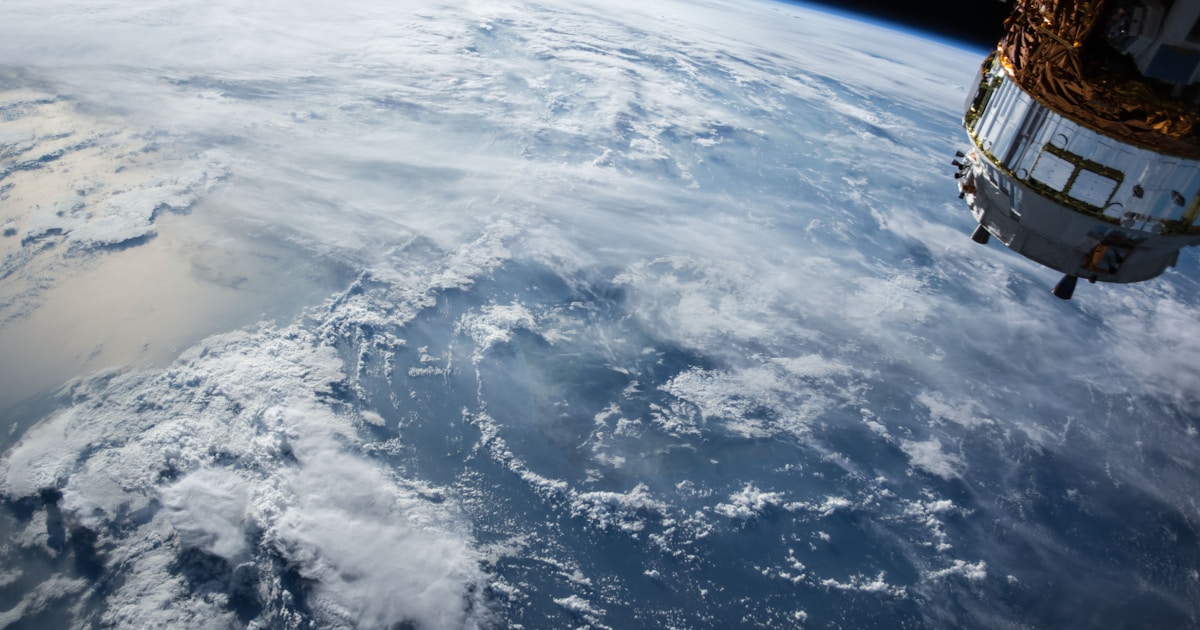
On October 4, 1957, a polished aluminum sphere the size of a beach ball transmitted a simple radio beep from orbit. Sputnik 1, launched by the Soviet Union, was humanity's first artificial satellite — and the beep that changed everything. In that moment, the Space Age began, and the heavens ceased to be the exclusive domain of astronomers and poets.
"That's one small step for man, one giant leap for mankind." — Neil Armstrong, July 20, 1969
The Space Race
The Cold War transformed space from a scientific frontier into a geopolitical battleground. The Soviet Union drew first blood repeatedly: first satellite (Sputnik, 1957), first human in space (Yuri Gagarin, April 12, 1961), first spacewalk (Alexei Leonov, 1965).
The United States, stung by these Soviet achievements, responded with President Kennedy's audacious 1961 promise to land a man on the Moon before the decade's end. NASA's Apollo program became the largest peacetime mobilization of scientific talent in history. At its peak, over 400,000 engineers, scientists, and technicians worked on Apollo.
Apollo 11: The Moon Landing
On July 20, 1969, the Lunar Module Eagle touched down in the Sea of Tranquility with less than 25 seconds of fuel remaining. Neil Armstrong and Buzz Aldrin became the first humans to walk on the surface of another world, while Michael Collins orbited above in the Command Module.
The Apollo program ultimately sent 12 astronauts to the lunar surface across six missions. They brought back 842 pounds of moon rocks — samples that revolutionized our understanding of the Moon's origin and, by extension, the formation of the solar system itself.
The Shuttle Era
NASA's Space Shuttle program (1981-2011) introduced the world's first reusable spacecraft. Over 135 missions, the shuttle fleet deployed the Hubble Space Telescope, built the International Space Station, and carried 355 individuals into orbit. But the program was also marked by tragedy — the Challenger disaster in 1986 and the Columbia breakup in 2003 killed a total of 14 astronauts.
The International Space Station
The ISS, a collaboration between the US, Russia, Europe, Japan, and Canada, has been continuously occupied since November 2000. Orbiting at roughly 250 miles above Earth and traveling at 17,500 mph, it serves as a microgravity laboratory where scientists study everything from fluid dynamics to human bone density loss.
Mars: The Next Destination
Mars has captivated humanity's imagination like no other planet. NASA's rovers — Spirit, Opportunity, Curiosity, and Perseverance — have explored the Martian surface for over two decades. Perseverance, which landed in February 2021, carried Ingenuity, the first helicopter to fly on another planet.
Evidence strongly suggests that Mars once had liquid water on its surface. The discovery of subsurface water ice and seasonal methane emissions keeps alive the tantalizing possibility that microbial life may once have existed — or may still exist — on the Red Planet.
The Private Space Revolution
The 2020s have witnessed an unprecedented shift: private companies are now leading the frontier. SpaceX, founded by Elon Musk, made history with the first privately developed spacecraft to reach orbit, the first commercial crew missions to the ISS, and the development of the Starship — a fully reusable launch system designed to carry humans to Mars.
Blue Origin (Jeff Bezos) and Virgin Galactic (Richard Branson) are pioneering space tourism, while companies like Rocket Lab are democratizing satellite launches with smaller, more affordable rockets.
What Lies Ahead
The next decade promises the Artemis program's return of humans to the Moon, the construction of the lunar Gateway space station, and potentially the first crewed missions to Mars. Meanwhile, NASA's James Webb Space Telescope is peering deeper into the cosmos than ever before, capturing images of galaxies that formed less than 400 million years after the Big Bang.
The final frontier isn't final at all — it's just beginning.
Space Exploration Assessment
Before you leave, verify your understanding of the material. Earn up to 80 Sparks for a perfect score.
Continue Reading
This article was published by the Rational Brain Editorial Board. We are dedicated to creating deeply researched, highly engaging educational content that bridges the gap between traditional publishing and cognitive-science-backed active recall.